Yes. Legal registration matters.
Completing a celebrant course is not the same as the ability to legally marry (solemnise) couples.
In Ireland and Northern Ireland, only people who are registered on the list of solemnisers can carry out the legal marriage process.
A lot of organisations provide celebrant training, but don't offer a pathway to registration as a legal celebrant/solemniser once you graduate. This means you complete your training, graduate, and can only deliver 'symbolic' wedding ceremonies, with no legal element.
At FuturFaith, we train and support celebrants so they can do both: create meaningful ceremonies and legally marry couples.
What does "registered as a legal celebrant / solemniser" actually mean?
When it comes to weddings, there is a difference between a symbolic ceremony and a legal marriage ceremony.
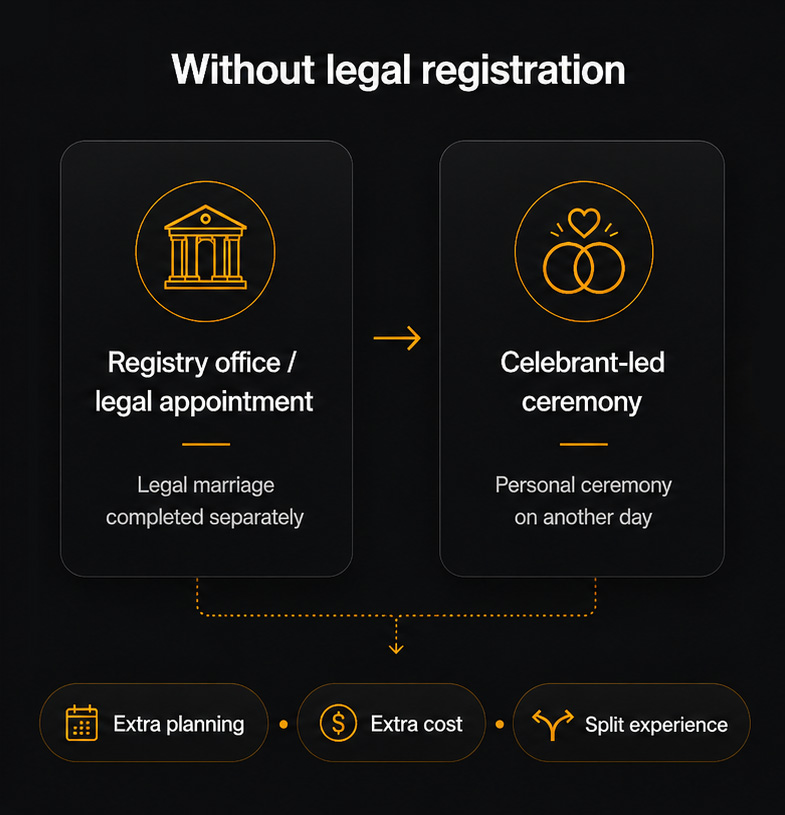
A symbolic celebrant can create and lead a beautiful ceremony, but if they are not registered as a solemniser, they cannot complete the legal marriage process. The couple will need to arrange the legal part separately, usually through a registrar or another legally authorised person.
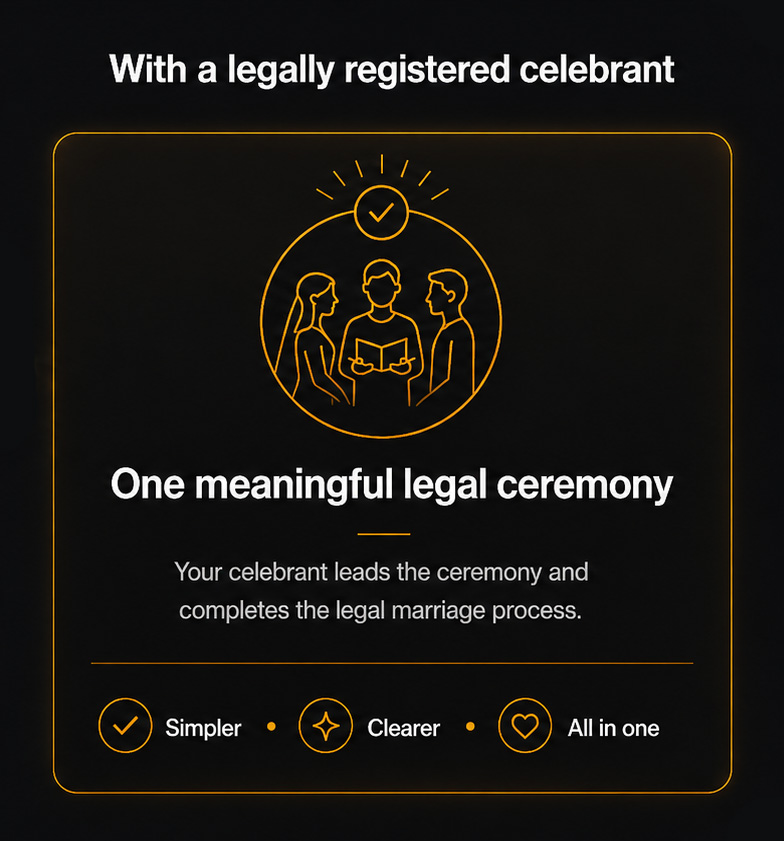
A legally registered celebrant can do both.
They can create the ceremony, tell the couple’s story, involve family and friends, lead the vows, and complete the legal requirements attached to the marriage.
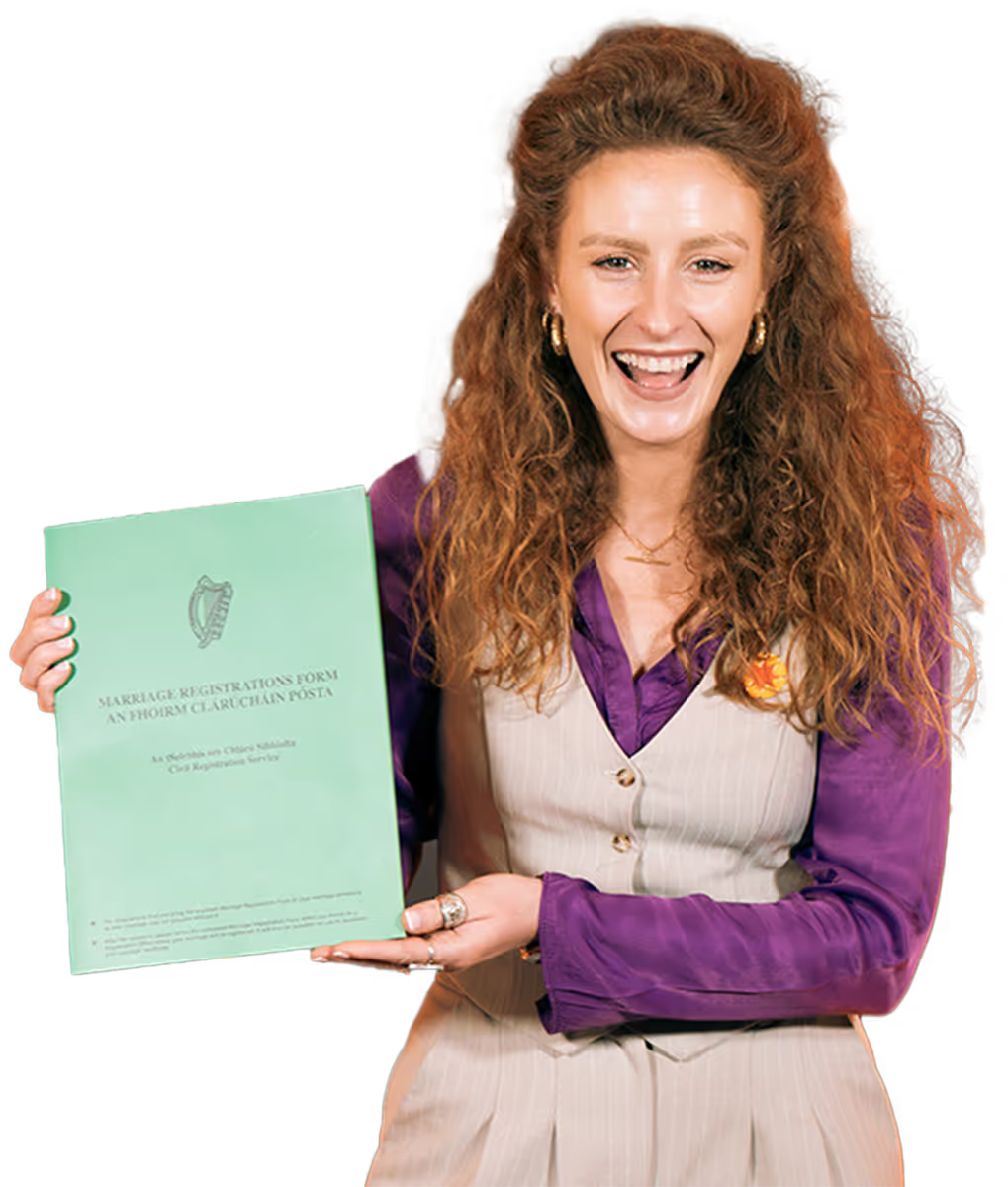
In the Republic of Ireland, couples must bring their Marriage Registration Form to the ceremony, and the person marrying them signs it so the marriage can be registered.
In Northern Ireland, couples must also follow the required marriage notice and registration procedures, and bring their Marriage Schedule to their wedding ceremony, with the ceremony conducted by someone legally authorised to do so.
For the couple, that distinction is huge.
Couples usually want one ceremony instead of two.
Most couples do not want to split their wedding into separate parts.
They do not want one legal appointment in a registry office and then another “real” ceremony later with a celebrant.
They do not want to pay one person for the legal side and another person for the personal ceremony.
They do not want confusion around which ceremony is the one that “counts”.
They want one wedding day. One ceremony. One celebrant. One person who can hold the emotional meaning of the moment and also complete the legal process properly.
That is why being a legal celebrant/solemniser is essential for professional celebrants.
A couple might love your personality. They might love your writing style. They might love the way you speak, the way you tell stories and the way you create ceremony.
But if another celebrant can offer all of that plus the legal marriage process, many couples will choose the person who can do both.
That is not because couples do not value ceremony. It is because they want simplicity, confidence and clarity.
The problem with celebrant-only training.
Many people come to celebrancy with genuine passion. They want to support couples and families. They want to create meaningful ceremonies.
They want to build a career around people, storytelling and important life moments.
So they sign up for a celebrant course.
They spend money. They complete the training. They receive a certificate.
Then they start trying to get wedding bookings.
And only then do they discover the problem.
They are trained to write and conduct ceremonies, but they are not registered to legally marry couples.
That means every wedding enquiry becomes more difficult.
Couples ask:
“Can you legally marry us?”
And if the answer is no, the celebrant has to explain that the couple will need to arrange the legal part separately.
For some couples, that is fine. There will always be people who want a symbolic ceremony only. But for many engaged couples, especially those planning a full ceremony in Ireland or Northern Ireland, it becomes a dealbreaker.
We regularly hear from people who trained elsewhere and later realised they had spent money on a course that did not give them the professional pathway they thought they were getting. They learned how to write and deliver ceremonies, but they were left without the legal status that many couples are actively looking for.
That can be deeply frustrating and time consuming. It can also be expensive.
Legal registration helps you compete professionally.
Celebrancy is a growing field, but it is also a competitive one.

Couples are doing more research than ever. They are comparing celebrants online. They are looking at websites, reviews, videos, social media profiles and wedding directories.
One of the first practical questions they often ask is:
“Can this person legally marry us?”
If your answer is yes, you are in a stronger position.
Legal registration gives you a clearer professional offering. You are not simply saying:
“I can conduct a lovely symbolic ceremony.”
You are saying:
“I can create your ceremony and legally marry you.”
That is a much stronger message.
It gives couples fewer reasons to hesitate. It gives venues more confidence referring you. It gives wedding planners a more complete service to recommend. It allows you to position yourself as a professional legal celebrant, not a ceremony officiant.
That matters when you are trying to build a real career.
Why FuturFaith graduates have a different pathway.
FuturFaith was built to train celebrants and ministers who can work professionally in the real world.
That means our training does not stop at ceremony writing.
Our Path to Ministry course covers the practical, creative, professional and legal sides of becoming a celebrant. Students learn how to create and deliver ceremonies, how to support couples and families, how to conduct themselves professionally, and how to prepare for the responsibilities of legal registration.
Graduates of FuturFaith can then move forward through our nomination and registration pathway, allowing them to become registered to solemnise/make legal marriages in the Republic of Ireland and/or Northern Ireland, subject to the relevant registration processes.
That is a major difference.
It means our students are not leaving with a certificate and hoping for the best. They are training towards a professional role with a clear route to becoming a legal celebrant.
That means our training does not stop at ceremony writing.
For anyone who wants to focus on weddings, this is especially important.
Wedding couples are not just buying a ceremony. They are trusting someone with one of the most important legal and emotional moments of their lives.
Being properly trained and legally registered gives you credibility.
The difference between being “qualified” and being legally able.
This is where many new celebrants get caught out.
A person can be qualified by a private training provider but still not legally able to marry couples.
Those are two different things.
A certificate from a course may show that you completed training. It may show that you understand ceremony structure, public speaking, scripting or client work.
But it does not mean you can solemnise a marriage.
Legal authority comes through the relevant nomination process, not simply through completing a celebrant course.
That is why people need to be careful when choosing training.
A person can be qualified by a private training provider but still not legally able to marry couples.
Before joining any celebrant course, you should ask:
Will this course give me a pathway to legal registration?
Will I be able to legally marry couples after I graduate, subject to the proper process?
Will I be supported beyond the theory of ceremony writing?
Will this training help me actually get bookings?
Will couples see me as someone who can offer the full wedding ceremony experience?
If the answer is no, you may be investing in a course that gives you knowledge but not the professional opportunity you expected.
Why couples care so much about the legal side.
From the couple’s point of view, weddings are already full of decisions.
Venue. Guest list. Photographer. Music. Food. Dresses. Suits. Flowers. Timelines. Speeches. Family dynamics. Budget.
The last thing they want is extra confusion around the ceremony.
When a celebrant is not a registered solemniser, or "legal celebrant", the couple may have to arrange a separate legal ceremony. That can mean extra appointments, extra fees, extra planning and sometimes a sense that their wedding is split in two.
For some couples, that separation works.
But for many, it does not.
They want the ceremony they share in front of their loved ones to be the ceremony where they are actually legally married.
They want the vows, the legal declaration, the signing and the emotional heart of the day to happen together.
That is why legal celebrants are so valuable. They allow couples to have a ceremony that feels deeply personal and complete.
The risk of training without checking the outcome.
One of the hardest things we hear from people who completed training to become a celebrant is regret.
People come to us after completing other courses and say they wish they had researched understood the differences of being a celebrant and a solemniser/legal celebrant.
They thought they were becoming a wedding celebrant.
They thought they would be able to take bookings.
They thought couples would be happy with a symbolic ceremony.
Then they entered the market and discovered that many couples were looking for a legal celebrant.
By that stage, they had already spent their money. They had already spent their time. They had already completed training that did not give them the pathway they needed.
That is why this question matters so much:
Is being legally registered important as a celebrant?
If you want to conduct weddings professionally in Ireland or Northern Ireland, yes, it is extremely important.
Not because symbolic ceremonies have no value. They do.
But because registration as a solemniser/legal celebrant gives you more opportunity, more credibility and a stronger service for couples.
What this means for your career as a celebrant.
If you only want to conduct vow renewals, namings, symbolic weddings or non-legal ceremonies, legal registration may not be essential.
But if your goal is to build a professional celebrant career that includes legal weddings, registration to be a solemniser should be a serious priority.
It can affect:
Your ability to get wedding enquiries.
Your ability to convert enquiries into bookings.
Your value to couples.
Your relationship with venues and planners.
Your pricing confidence.
Your long-term career prospects.
A legal celebrant can offer something complete.
They can stand with a couple on their wedding day, lead a ceremony that feels personal and meaningful, and also complete the legal process that makes the marriage official.
That is a powerful position to be in.
So, is being legally registered important?
Yes.
For modern wedding celebrants in Ireland and Northern Ireland, legal registration is not just a nice bonus. It can be the difference between struggling to explain what you cannot do and confidently offering couples the full ceremony experience.
At FuturFaith, we believe our celebrants are trained for the real world.
That means beautiful ceremonies, strong storytelling, confident delivery, professional standards and a clear pathway to legalities.
Couples want meaning.
They want personality.
They want warmth.
They want someone who can tell their story properly.
But they also want the legal side handled with confidence.
That is why becoming registered as a legal celebrant/solemniser matters.
And that is why choosing the right training matters from the very beginning.