Guide

10 min read

Gain real-world experience by shadowing a celebrant.

Home

Help Centre

Shadowing Sessions

Getting Started

During Training

After Graduation

Overview

Shadowing sessions give you the opportunity to observe an experienced FuturFaith celebrant conducting real ceremonies, in real settings, with real couples and guests.

This is where much of the “in-between” learning happens. You’ll see how ceremonies unfold outside of scripts and lesson videos, and how celebrants respond to people, venues, time pressure, and the unexpected.

What shadowing is (and isn't)

Shadowing is not about performing or assisting in any way. You won’t be expected to speak, participate, or take on a role — your focus is on observing, listening, and learning from the experience.

What it is

Observing live wedding ceremonies conducted by a FuturFaith celebrant.

Seeing how preparation, delivery, and follow-up are handled in practice.

What it isn't

A performance or assessment.

A requirement to speak or lead.

A substitute for your own assignments or assessments.

How we capture your learning

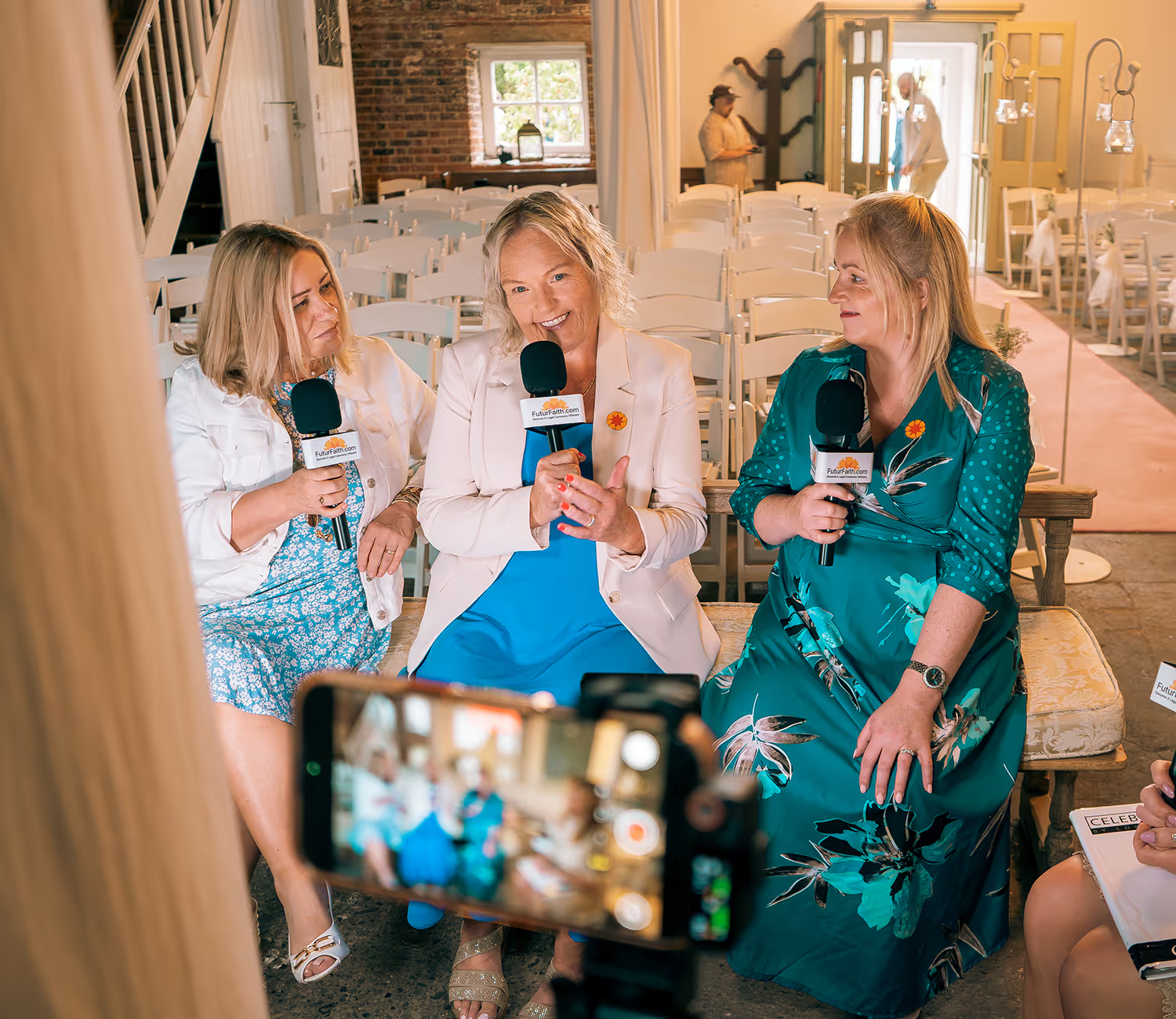
Shadowing doesn’t stop when the ceremony ends. We conduct simple interviews to capture your thoughts on the experience as a shadowee, before and after the session.

Before the ceremony

What we'll cover:

What you're excited to learn today.

What you'll be watching for.

Your Path to Ministry experience thus far.

Why it matters:

You arrive at the ceremony with intention. By articulating what you’re curious about in advance, you’re better placed to notice the decisions, techniques, and moments that matter most to you.

After the ceremony

What we unpack:

What stood out to you.

Biggest things you want to remember.

Moments that challenged you.

Why it matters:

This is where the learning really lands. You’re invited to reflect on what you noticed, what surprised you, and what you’d do differently while the experience is still fresh.

Always your choice

Being filmed is always optional. If you'd prefer to keep your shadowing experience private, you are free to opt out of recording or sharing – once we're notified in advance.

Three women sitting on a bench indoors, each holding a FuturFaith.com microphone, with a smartphone recording them in the foreground.

What you'll learn from shadowing

Shadowing sessions help bridge the gap between theory and practice. Areas students commonly gain insight into include:

Ceremony flow & adaptability

You’ll see how a celebrant keeps a ceremony moving smoothly, even when plans change, guests are late, or something unexpected happens.

This includes pacing, tone, and knowing when to adapt without drawing attention to any issue that may arise.

Client communication

Observe how celebrants interact with couples before, during, and after the ceremony, including how they reassure nervous clients and keep things calm on the day.

Guest management

You’ll see how guest roles are handled, how instructions are communicated clearly, and how disruptions, if any, are managed discreetly and respectfully.

Pre-ceremony organisation

From co-ordinating with venues and suppliers to managing seating, timing, and logistics, shadowing shows how much work happens before the ceremony officially begins.

Legal & administrative awareness

You’ll gain context around marriage documentation, legal responsibilities, and how celebrants ensure everything is handled correctly and compliantly.

Equipment & setup

See how audio equipment is checked, positioned, and tested, and how celebrants troubleshoot calmly if something isn’t working as expected.

StartWhat shadowing isInterviewsWhat you'll learnFrequently askedWhat nextAll topics